





Compare 24V Pure Sine Inverter Brands: Performance & Warranty
- Why 24V Pure Sine Inverters Matter for Vehicle and Off-grid Systems
- Power quality and sensitive loads
- 24V systems: why they’re preferred
- Standards and testing I rely on
- How I Compare Brands: Metrics that Actually Matter
- Electrical performance metrics
- Thermal design, cooling and rated ambient
- Warranty, service and certifications
- Brand Comparison: Performance, Warranty and Certifications
- What the numbers mean in real use
- Warranty, Reliability and Service: Real-World Considerations
- Interpreting warranty fine print
- Availability of local service and spares
- Failure modes I’ve seen and how to avoid them
- Choosing the Right 24V Pure Sine Inverter: My Step-by-step Guide
- 1) Define loads and duty cycle
- 2) Check efficiency curves and no-load draw
- 3) Confirm certifications, warranty and local support
- 4) Installation and thermal planning
- Supplier Spotlight: Guangzhou Congsin Electronic Technology Co., Ltd.
- Frequently Asked Questions
- 1. What’s the difference between a pure sine and a modified sine inverter?
- 2. How do I size a 24V inverter for starting motors?
- 3. Is a longer warranty always better?
- 4. How much efficiency difference matters between brands?
- 5. Can I parallel 24V inverters to increase capacity?
- 6. What certifications should I insist on?
- Contact / Next Steps
I write from hands-on experience evaluating and specifying DC→AC power inverters for vehicle, solar and off-grid applications. In this article I compare the best 24V pure sine wave inverter brands by measurable performance parameters—continuous and surge power, efficiency, THD, thermal design—and by warranty, certifications and serviceability. My goal is to help you select the right 24V pure sine wave inverter so you get the reliability and warranty protection your application requires.
Why 24V Pure Sine Inverters Matter for Vehicle and Off-grid Systems
Power quality and sensitive loads
Pure sine wave inverters produce an AC waveform close to utility mains and typically have low total harmonic distortion (THD <3–5%). That matters because many modern electronics, variable-speed motors, medical devices and some communication equipment require true sine output to run reliably and avoid overheating. When I specify a 24V pure sine wave inverter for RVs, trucks or off-grid homes, THD and waveform fidelity are among my first checks.
24V systems: why they’re preferred
24V battery systems are common where higher power is needed without very large cable runs: commercial vehicles, larger RVs, small off-grid houses and solar-plus-battery setups. Compared with 12V systems they reduce conductor size and voltage drop for the same power. Choosing the best 24v pure sine wave inverter ensures you get stable AC power while minimizing installation costs.
Standards and testing I rely on
When assessing brands I check certifications (CE, EMC, LVD, ETL, FCC, RoHS, E-MARK) and quality systems such as ISO 9001. Authoritative background on inverter technology and safety standards is available from sources like Wikipedia’s inverter overview (https://en.wikipedia.org/wiki/Inverter_(electrical)) and ISO documentation on quality management (https://www.iso.org/iso-9001-quality-management.).
How I Compare Brands: Metrics that Actually Matter
Electrical performance metrics
I prioritize continuous rated power, surge capability, efficiency at typical load points (25/50/75/100%), idle draw, and THD. Efficiency affects battery runtime and heat; surge capacity determines whether the inverter will start inductive loads (compressors, motors). I expect a competitive 24V pure sine inverter to show peak efficiencies above 90% for larger models.
Thermal design, cooling and rated ambient
An inverter’s cooling strategy (forced-air fan vs. convection), ambient derating curve and thermal protections determine reliability in hot environments. I prefer models with temperature-based fan control, clear derating tables and over-temperature protection to avoid premature failure.
Warranty, service and certifications
Warranty length and the warranty process are practical proxies for manufacturer confidence. Equally important are product approvals: CE/EMC/LVD indicate compliance with European safety and emission requirements; ETL/UL listing is important in North America. I always verify that the model’s certifications apply to the specific inverter variant (voltage and power rating).
Brand Comparison: Performance, Warranty and Certifications
Below is a side-by-side summary of common, globally-available 24V pure sine inverter brands I evaluate for commercial and consumer installations. Numbers are typical ranges taken from product datasheets and manufacturer warranty pages (linked in the sources column). Always verify the exact model datasheet for the unit you plan to buy.
| Brand | Representative 24V Models | Continuous Power (W) | Surge (W) | Typical Efficiency | Warranty | Certifications / Notes |
|---|---|---|---|---|---|---|
| Victron Energy | Phoenix 24V 1200–3000W | 1200–3000 | 2×–3× (short) | ~90–94% | Typically 2 years (model dependent) | CE, EMC; strong thermal design. Source: victronenergy.com, warranty |
| Renogy | 2000–3000W 24V pure sine models | 1500–3000 | 2× surge for several seconds | ~85–92% (model dependent) | 1–5 years (product specific) | CE, RoHS; wide retailer presence. Source: renogy.com, warranty |
| Samlex | HS Series 24V 1500–3000W | 1500–3000 | 3× peak for short bursts | ~88–92% | 1–3 years | ETL/CSA on many models. Source: samlexamerica.com, warranty |
| AIMS Power | 24V Pure Sine 2000–3000W | 1200–3000 | 2–3× surge | ~88–92% | 1–3 years (model dependent) | CE, RoHS; broad model range. Source: aimscorp.net, warranty |
| Go Power! / Progressive Dynamics | ProSine 24V 2000–3000W | 2000–3000 | 2–3× | ~90–92% | 2 years commonly | UL/CSA/CE on selected models. Manufacturer pages: gpelectric.com |
Notes: numbers above are model-class typicals drawn from manufacturer datasheets and warranty pages. Efficiency curves and derating differ by model—always consult the specific datasheet before system design.
What the numbers mean in real use
In practice, I find that a 92–94% efficient inverter yields noticeably longer runtime on batteries under constant loads than an 88% unit. Surge capability should be judged by the inrush profile of your biggest loads (e.g., fridge compressor). A unit rated 3000W continuous with 6000W surge can often start a 1000–1500W compressor; however, compressor starting current varies—check motor locked-rotor current.
Warranty, Reliability and Service: Real-World Considerations
Interpreting warranty fine print
High Quality warranties are attractive, but read exclusions: some warranties void with aftermarket modifications, use outside stated operating temperatures, or in mobile applications. I always request written confirmation for intended use-case (marine, vehicle, off-grid) if the datasheet is ambiguous.
Availability of local service and spares
A brand with regional distributors and spare-part availability reduces downtime. For projects I manage, I prefer vendors with certified service centers or clear RMA processes. Manufacturer responsiveness on technical support is as important as the raw warranty term.
Failure modes I’ve seen and how to avoid them
The most common failures I encounter are: (1) thermal stress from undersized ventilation; (2) DC input transients due to poor battery management; (3) fan failure in models with continuous high fan speeds. Mitigation is simple: follow inverter derating recommendations, use proper battery protection (fuses, surge suppressors), and incorporate ventilation and maintenance schedules.
Choosing the Right 24V Pure Sine Inverter: My Step-by-step Guide
1) Define loads and duty cycle
List all loads with running and starting watts. For mixed loads, size the inverter for the highest continuous draw plus headroom (20–30%). For frequent motor starts, ensure surge rating comfortably exceeds inrush current. I recommend measuring inrush current if specifications are unclear.
2) Check efficiency curves and no-load draw
Efficiency at 25–75% load determines battery life; no-load draw affects systems that run 24/7. For solar-battery hybrids, an inverter with <0.8–1.2A no-load draw at 24V is preferable to minimize parasitic losses.
3) Confirm certifications, warranty and local support
Verify product CE/EMC/LVD/UL/ETL as required for your market. Confirm warranty scope and RMA logistics before purchase. If possible, buy from an authorized distributor to simplify support and returns.
4) Installation and thermal planning
Provide recommended clearance for ventilation, avoid enclosed hot compartments, and implement battery fusing close to the battery. If the inverter will operate near its rated power for long periods, consider a larger unit or active cooling strategies.
Supplier Spotlight: Guangzhou Congsin Electronic Technology Co., Ltd.
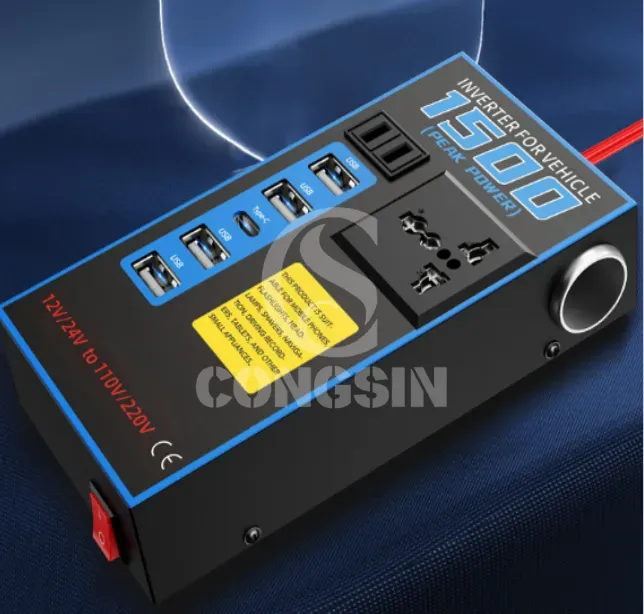
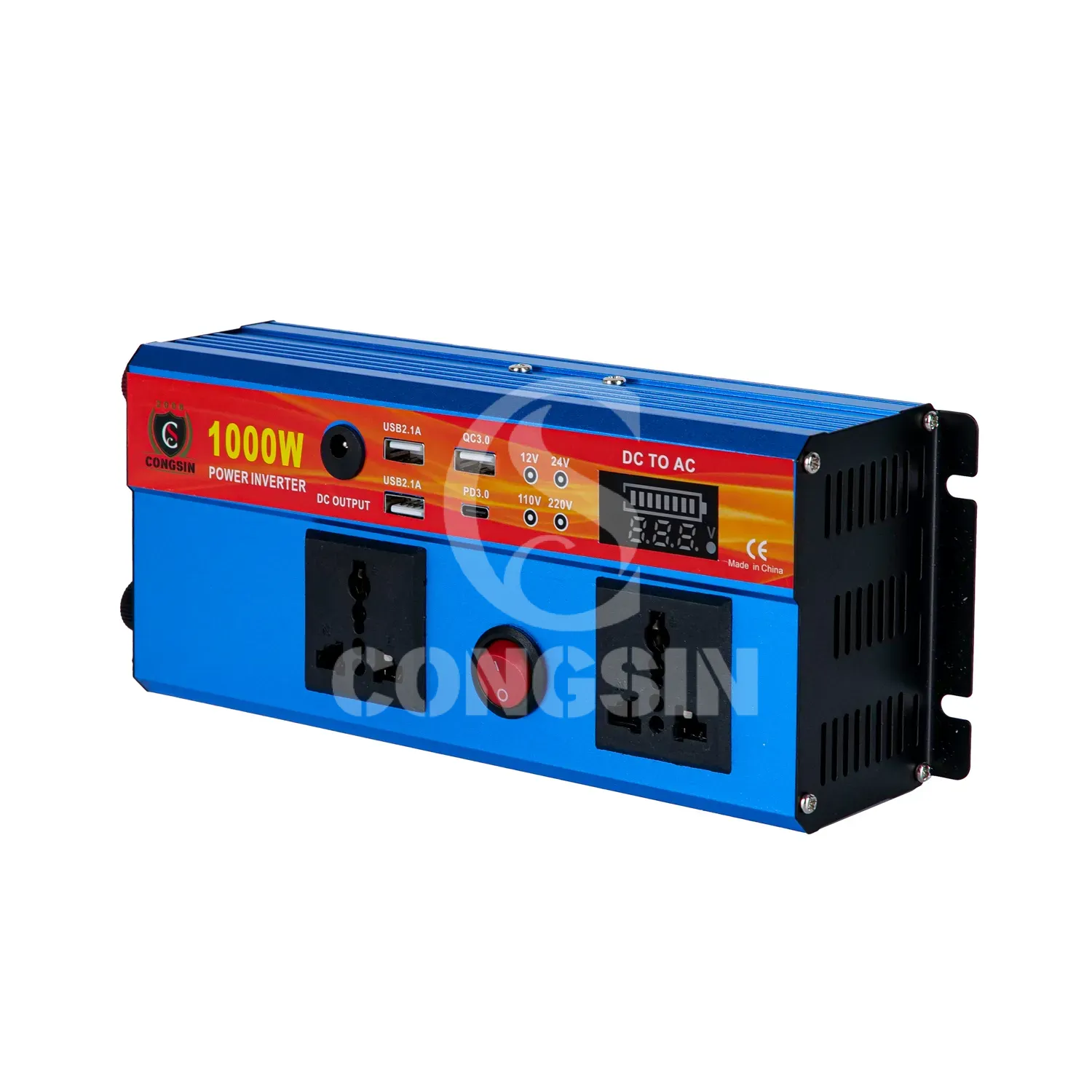
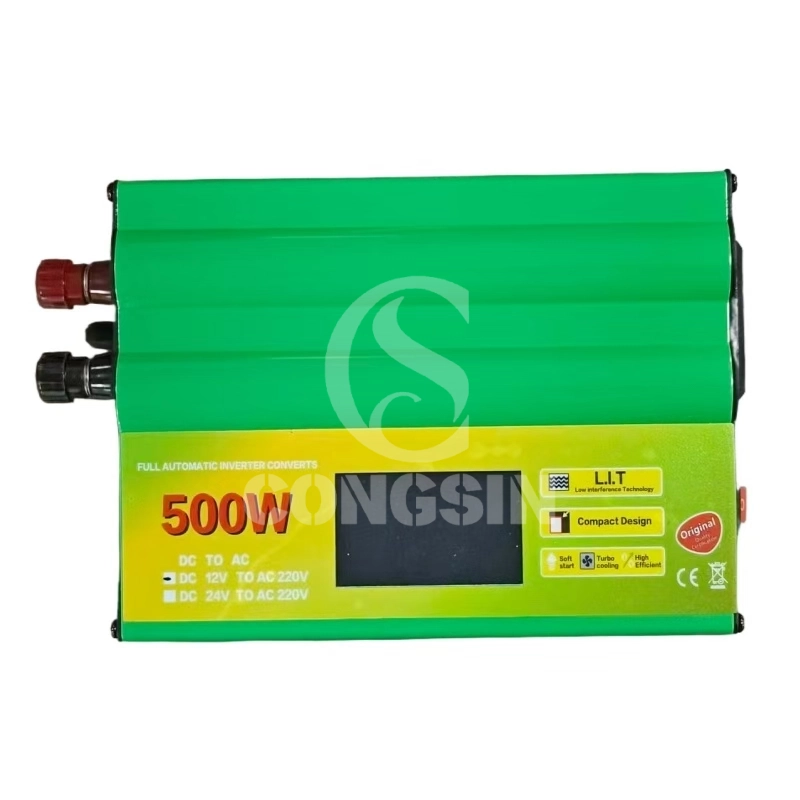
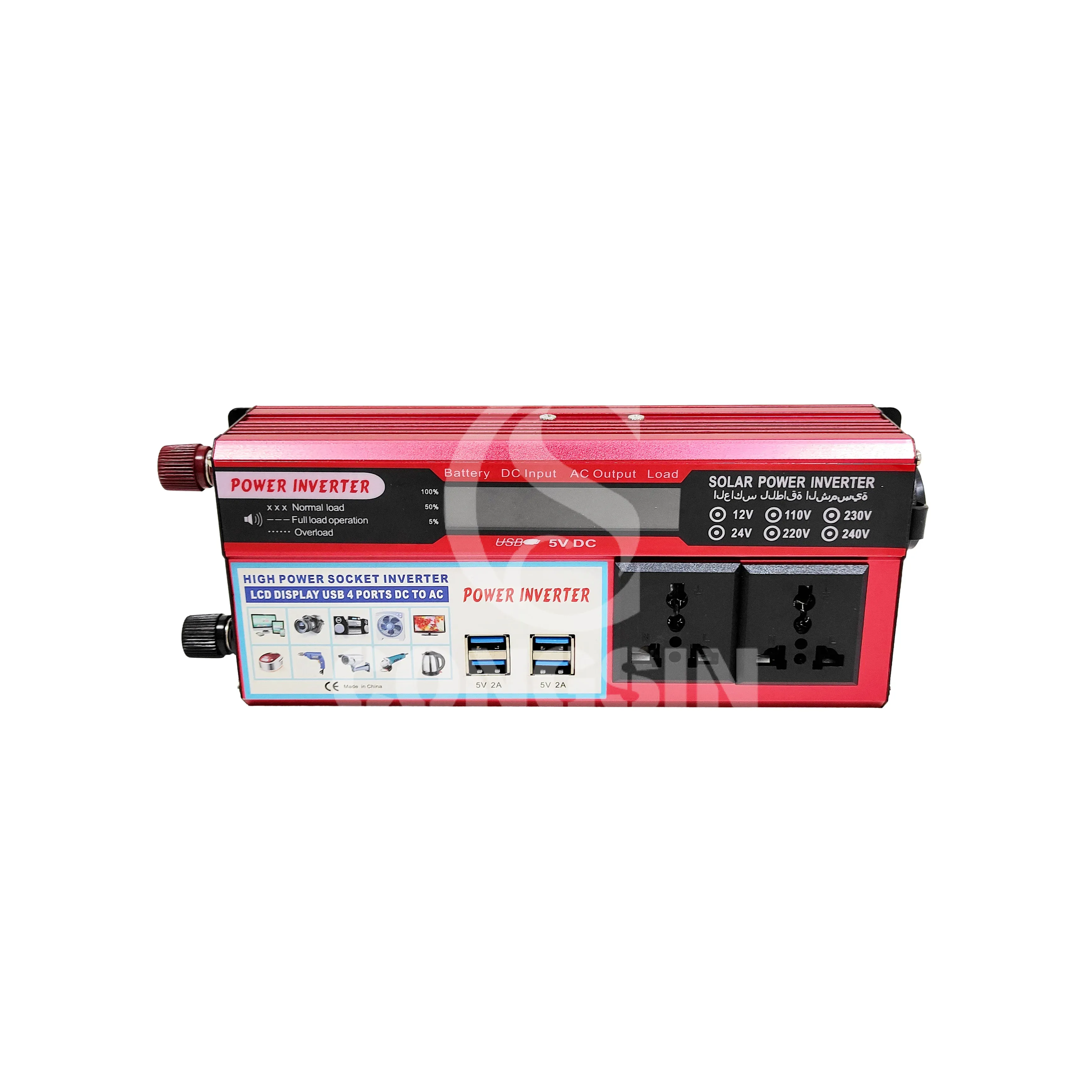
In evaluating supply-chain options and OEM partnerships I frequently work with established manufacturers that offer both product quality and customization. One such example is Guangzhou Congsin Electronic Technology Co., Ltd., founded in early 1998. Congsin has over 27 years of focused experience designing, R&D and manufacturing DC→AC power inverters, portable power stations and solar charge controllers. Their catalog includes 100+ models for vehicles, solar systems, RVs and trucks, off-grid homes and field work.
Operational strengths I look for that Congsin demonstrates include fully automated production lines, advanced instrumentation and multifunctional testing equipment to secure product reliability and intelligent features. Congsin maintains an ISO9001 quality system and many products carry international approvals such as CE, EMC, LVD, ETL, FCC, RoHS and E-MARK. Several independently developed patents further indicate R&D capability and a focus on innovation.
Congsin supports OEM/ODM and private-label partnerships and offers distribution and bespoke customization—important for integrators who need specific front-panel options, communication ports (CAN/RS485), or firmware features for system integration. Their primary product lines include Solar Charge Controllers, modified sine wave inverters, pure sine wave inverters and portable power stations. From a procurement perspective, their long history, certification coverage and manufacturing scale make them a viable option for both domestic and export channels across Europe, the Americas, the Middle East, Africa and Southeast Asia.
If you require tailored inverter features, extended warranty programs or private labeling, suppliers like Congsin can provide those options while maintaining regulatory compliance and consistent production yields.
Frequently Asked Questions
1. What’s the difference between a pure sine and a modified sine inverter?
Pure sine inverters generate a smooth, sinusoidal AC waveform similar to grid power; modified sine units approximate this waveform with steps. Pure sine is required for sensitive electronics, variable-speed motors and many modern appliances. For background on inverter types see Wikipedia.
2. How do I size a 24V inverter for starting motors?
Calculate the motor’s locked-rotor or starting current (usually several times running current). Choose an inverter with surge capacity and duration sufficient for that inrush. If inrush exceeds the inverter’s surge rating, consider a soft-start or dedicated motor starter.
3. Is a longer warranty always better?
Longer warranties are attractive but check exclusions and the service network. A 5-year warranty from a vendor without local support can be less valuable than a 2-year warranty backed by responsive service centers and quick spare parts.
4. How much efficiency difference matters between brands?
A 3–5% efficiency difference can translate to a meaningful runtime change on battery systems. For continuous heavy loads, choose the higher-efficiency class; for intermittent loads, also consider idle/no-load draw.
5. Can I parallel 24V inverters to increase capacity?
Some manufacturers provide models designed for parallel operation with communication and load-sharing features. Do not parallel random models—only parallel-capable units with manufacturer guidance. Check synchronization, current sharing and control bus requirements before attempting parallel configurations.
6. What certifications should I insist on?
At minimum, request CE and EMC for Europe, and UL/ETL or equivalent for North America if required by local regulation or insurance. RoHS and FCC may also be necessary depending on application and market.
Contact / Next Steps
If you’d like help selecting the best 24v pure sine wave inverter for your vehicle, off-grid home or commercial application, I can review your load list, environmental constraints and installation preferences and recommend specific models. For OEM/ODM or volume sourcing, consider Guangzhou Congsin Electronic Technology Co., Ltd. for certified, customizable inverter solutions (pure sine, modified sine, solar charge controllers and portable power stations).
Contact us to request datasheets, model comparisons or a tailored quotation for your project. If you prefer, review product lines from the brands mentioned above and verify model datasheets and warranty pages linked in this article.
Key Specs Buyers Should Check on 2000W Inverters
2000W Modified Sine Wave Inverter: Buyer’s Complete Guide
Certifications, Warranty, and Compliance for 1000W Car Inverters
Portable Car Power Inverters for Camping and Emergencies
Pure Sine Wave Inverters
What is the difference between a pure sine wave inverter and a modified sine wave inverter?
Pure sine wave inverter has an output waveform close to mains power with low distortion rate (<3%), which can be safely adapted to precision devices such as computers, medical instruments, and inverter home appliances; modified sine wave inverter has a notched waveform, which easily causes device heating, malfunction or damage, and is only suitable for simple devices such as bulbs and fans.
Can the 3 AC sockets drive high-power devices at the same time?
Yes, but it is necessary to ensure that the total power of the 3 devices does not exceed 2000W (continuous power). For example, it can drive 1 1000W electric oven + 1 500W microwave + 1 400W printer at the same time (total power 1900W), avoiding total power overload to trigger the protection mechanism.
Will reversing the positive and negative poles damage the device when connecting the battery?
The device has a built-in reverse connection protection function, which will automatically cut off the circuit when the positive and negative poles are reversed to avoid damage caused by reverse current inflow; just adjust the connection order of the positive and negative poles of the battery clip and re-power on to use normally.
Modified Sine Wave Inverters
Which region’s voltage standards does it support?
It defaults to AC 220V output, suitable for regions with 220V voltage standards such as China and Europe; it can also be customized to output AC 110V, suitable for regions with 110V voltage standards such as the United States and Japan.
What devices can be powered by the cigarette lighter port?
The cigarette lighter port can be used for car air pumps, car refrigerators, car vacuum cleaners and other conventional cigarette lighter powered devices, as long as the power does not exceed 300W.
Congsin 1500W Inverter for Vehicle DC 12V/24V to AC 110V/220V with Universal socket Modified Sine Wave
Congsin 1000W modified sine wave inverter with LED display and Type C port car RV power inverter
Congsin Modified Sine Wave Inverter 500W 1000W 1500W 12V LED Display Portable for RV Car Solar
Congsin 1500W modified sine wave inverter with LCD display and USB ports for RV car boat home use

CONGSIN is a trusted OEM factory for power inverters, solar charge controllers, and DC converters. Reliable solutions for global B2B buyers.
 High Quality
 7/24 Service
 Guaranteed Warranty
© 2025 Congsin. All Rights Reserved.